
Tired of expensive, complex, and secondary-pollution-prone methods for treating hexavalent chromium contamination? BGRIMM's innovative approach uses a common, safe polymer—polyethylene glycol (PEG)—to rapidly reduce toxic Cr(VI) to less harmful Cr(III) under sunlight or artificial light.
How It Works:
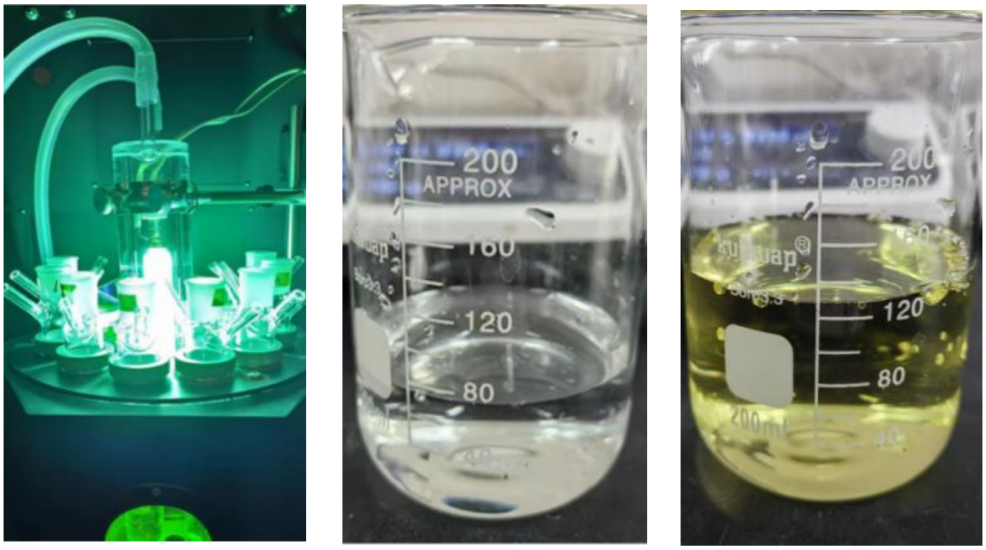
Simply add PEG as a photo-initiator to acidic Cr(VI)-contaminated water or soil. Under light irradiation (200–525 nm wavelength range), the highly toxic hexavalent chromium is quickly reduced to trivalent chromium—which is far less toxic and has much lower solubility. The process operates at room temperature with minimal equipment.
Key Advantages:
1 Safe & Affordable: PEG is non-flammable, non-explosive, non-toxic, and a low-cost bulk chemical.
2 Exceptionally Efficient: Achieves >98% Cr(VI) reduction within 2 hours.
3 Cost-Effective: Reduces remediation costs by >30% compared to conventional methods.
4 Simple Operation: Minimal equipment requirements, easy to deploy at scale.
5 No Secondary Pollution: Clean process without hazardous byproducts.
Ideal Applications:
▸Treatment of chromium-containing wastewater from mineral processing, smelting, electroplating, and leather tanning
▸Remediation of Cr(VI)-contaminated soil
▸Chromium resource recovery
Performance at a Glance:
▸ Cr(VI) reduction rate: >98%
▸ Cost reduction: >30%
▸ Reaction time:<2 hours
▸ Light response range: 200–525 nm
A green, practical, and scalable solution for one of the most persistent industrial pollution challenges. Let's clean up chromium—simply and sustainably.


 Home
Home